All Care Guides

Thrips on Peperomia: Identification, Biology & Eradication

2026-05-03
Updated: 2026-05-14
Marcus Thorne

Thrips (order Thysanoptera) are 1 mm slender insects with fringed wings and asymmetrical rasping-sucking mouthparts. On Peperomia obtusifolia they produce three diagnostic signs: metallic silvering on the upper leaf surface, black frass specks clustered on the silvered patches, and twisted or scarred new growth where adults have fed on developing meristem tissue. They are difficult to eradicate because females deposit eggs inside the leaf tissue and second-instar larvae drop to the substrate to pupate — both life stages beyond the reach of contact sprays. Effective control requires a 3-phase protocol: systemic uptake of imidacloprid or acetamiprid (kills feeding nymphs through the sap), blue sticky traps (intercepts mobile adults), and mechanical removal of the most heavily infested leaves. Treatment must be sustained over four weekly cycles to cover the full 14–15 day generation cycle. Plants showing concentric ring patterns should be discarded — thrips vector Tospoviruses (TSWV, INSV) for which no plant treatment exists.

The damage typically precedes visible detection of the insect. By the time silver patches are obvious on mature leaves, the colony has been established for 2–3 weeks and a second generation is already developing inside the leaf tissue. At 25 °C indoors, a single female lays 40–80 eggs over a 30-day adult lifespan; a colony reaching 100 adults can deposit several thousand eggs within a fortnight. The narrow body and thigmotactic behaviour mean adults hide within the unfurling apex and in the petiole–stem leaf axils rather than on the broad open leaf surface.

Diagnostic SignAppearanceWhat It Confirms
SilveringMetallic silver, grey, or bronze patches on upper leaf surfacePermanent cell drainage — active or past feeding
FrassBlack or dark-green varnish-like specks on silvered tissueActive feeding population
Twisted new growthCupped, asymmetric, or scarred unfurling leavesMeristem feeding — established infestation
Paper-tap test1 mm slivers crawl in fast jerky bursts on white paperThysanoptera confirmed

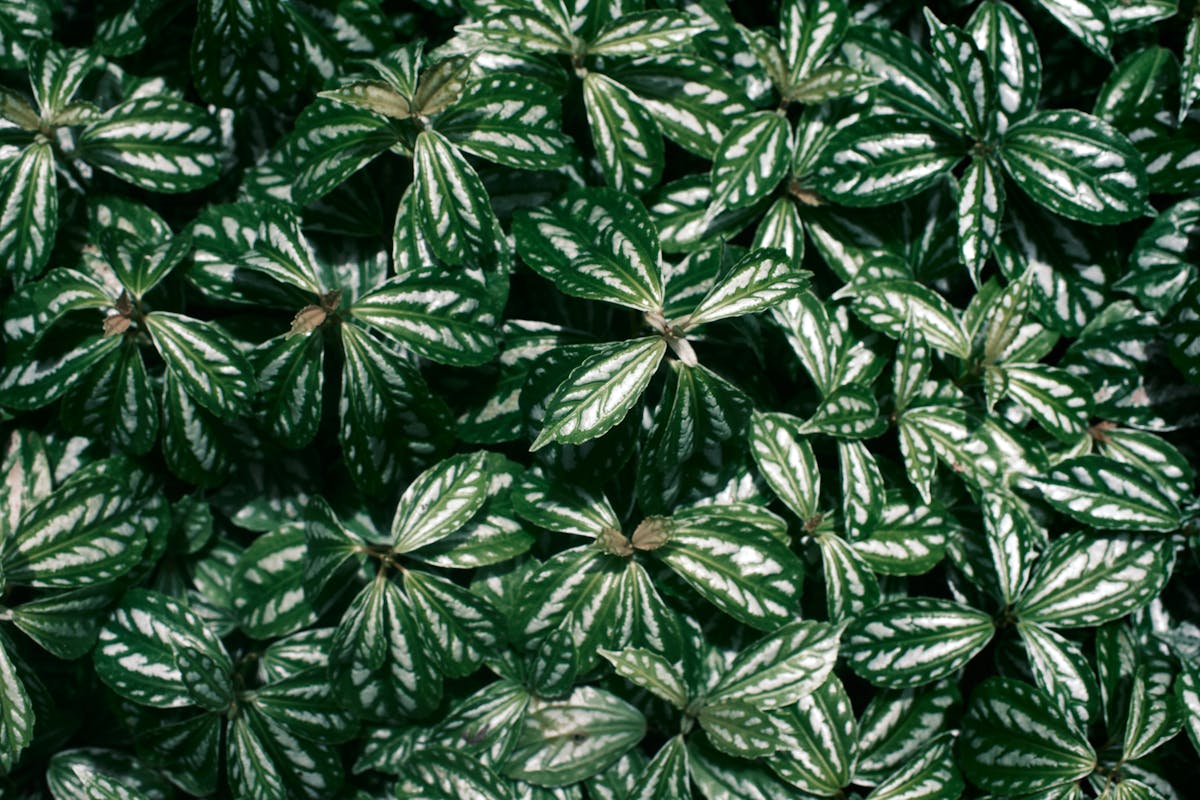
Close-up of glossy green Peperomia obtusifolia leaves showing the waxy cuticle that thrips must rasp through to feed

1. Identification: Three Diagnostic Signals and the Paper-Tap Test

Signal 1 — Silvering. The most obvious and earliest visible damage is a metallic silver, grey, or bronze sheen on the upper leaf surface, often beginning near the leaf base and spreading outward. The mechanism is straightforward: a thrips uses its single enlarged mandible to scrape away the waxy cuticle and rupture the underlying epidermal cells, then siphons out the cytoplasm and chloroplast contents. The drained cells fill with air, and the air-filled cavities refract light at a different angle than intact cells — producing the characteristic metallic appearance described in detail by the RHS thrips guidance. Unlike fungal leaf spots, silvering has no halo, no water-soaked margin, and no progression in the days following the insect's removal.

Signal 2 — Frass. As thrips consume large volumes of sap relative to body mass, they excrete waste continuously. Frass appears as small (0.1–0.3 mm) black or dark-green varnish-like specks, deposited directly on or adjacent to the silvered feeding scars. Frass does not wipe away with a dry finger the way dust does — it adheres to the leaf surface. Spatial correlation is the diagnostic: silvering plus clustered black specks on the same leaf is 100% confirmation of Thysanoptera. According to the UC IPM thrips guidance, frass deposition is one of the most reliable indicators distinguishing active feeding from older, healed damage.

Signal 3 — Twisted new growth. Thrips are thigmotactic — they require physical contact on multiple body surfaces and aggregate in tight, enclosed spaces. The unfurling apex of a Peperomia, where two emerging leaves press against each other, is the preferred feeding site. Cells fed upon at the meristematic stage fail to expand normally; surrounding undamaged cells expand correctly. The result is a permanently cupped, hooked, or asymmetric leaf that does not recover after the colony is treated. This damage is often misdiagnosed as a calcium deficiency, but the corrective intervention is pest removal, not airflow correction or fertiliser adjustment.

The paper-tap test. Adults are at the limit of naked-eye visibility and move away from disturbance, so direct inspection often fails. Hold a sheet of white paper beneath a suspect leaf and tap the leaf firmly three or four times. Dislodged adults fall onto the paper and crawl in fast, jerky bursts (distinct from the slow, steady movement of mites). One positive paper-tap result on a Peperomia confirms the diagnosis; absence of positive results across three consecutive weekly tests confirms successful eradication.

Detailed macro view of an insect feeding on a green leaf surface, illustrating the scale at which thrips operate on Peperomia foliage

2. The Life Cycle: Why Contact Sprays Fail

Frankliniella occidentalis (western flower thrips), the species most commonly encountered on indoor Peperomia obtusifolia, completes a generation from egg to reproductive adult in approximately 14–15 days at 25 °C, slowing to 21–28 days at 18–20 °C. The cycle has five stages, two of which are physically beyond the reach of any contact spray:

  • Egg (3–5 days): Deposited inside the leaf tissue via a saw-toothed ovipositor that slits the epidermis. Contact insecticides applied to the leaf surface do not reach eggs sealed below the cuticle. This is the central reason that surface treatments fail.
  • First-instar larva (1–3 days): Emerges from the leaf and begins feeding on the upper surface. Fully exposed; vulnerable to contact and systemic treatments.
  • Second-instar larva (2–4 days): Continues feeding, then drops to the substrate.
  • Prepupa and pupa (3–6 days): Located in the upper 1–2 cm of the substrate. Non-feeding, immobile, and physically inaccessible to foliar sprays. Systemic insecticides do not reach pupae either, because pupae do not feed.
  • Adult (15–30 days): Emerges from substrate, ascends to foliage, begins feeding within hours, begins egg-laying within 2–3 days. Highly mobile; flies between plants.

The implication is mechanistic, not strategic: a single foliar application of insecticidal soap, neem oil, or pyrethrin kills the exposed adults and first-instar larvae present at the time of treatment. The eggs and pupae are untouched, and within 7–10 days a new cohort of adults emerges and begins laying. This is the cause of the universal "thrips came back two weeks after I sprayed" pattern — not treatment failure, but life-cycle reality. Reference data on Frankliniella development times is available from the Wikipedia thrips article and aligns with greenhouse pest-management literature.

3. The 3-Phase Eradication Protocol

A pest with eggs sealed inside the leaf and pupae buried in the substrate cannot be eliminated by surface treatment alone. The three-phase protocol attacks each life stage through its specific vulnerability.

Phase 1 — Systemic uptake. Apply a soil drench of a systemic neonicotinoid containing imidacloprid at label rate. The root system absorbs the active compound and distributes it through the xylem into the sap. When first-instar larvae hatch from leaf-sealed eggs and begin feeding, they ingest the systemic compound and die before completing the larval stages. Imidacloprid persists in plant tissue for 4–8 weeks — a single drench covers the full eradication window. Apply once at week 1 and again at week 4.

Phase 2 — Foliar contact kill. 24 hours after the systemic drench, spray the entire plant — upper and lower leaf surfaces, petioles, axils, and stem — with a potassium fatty-acid insecticidal soap at label dilution. The soap disrupts the thrips cuticle by dissolving the lipid layer, causing rapid desiccation of exposed adults and first-instar larvae. A 0.5% azadirachtin (neem oil) spray applied 48 hours after the soap provides growth-disruption coverage — azadirachtin mimics the moulting hormone ecdysone, preventing surviving nymphs from completing development. Repeat soap + neem applications every 7 days for 4 weeks. Do not substitute pyrethroid-based household sprays — Frankliniella populations have widespread documented resistance to pyrethroids.

Phase 3 — Blue sticky traps. Unlike fungus gnats (attracted to yellow at 570 nm), thrips exhibit strong positive phototaxis toward blue wavelengths (440–480 nm). Place blue sticky traps at the soil surface, one per pot, and replace every 14 days. The traps serve two functions: they intercept mobile adults before they reach reproductive age, and they provide a quantitative measure of population. A weekly count on the trap is the most reliable indicator of treatment progress — a falling adult count across consecutive weeks confirms the protocol is working; a stable or rising count indicates the cycle is being broken too slowly.

PhaseTarget life stageMechanismTiming
Systemic drenchHatching larvaeXylem-transported imidacloprid → ingested via sapWeek 1, Week 4
Foliar soap + neemAdults, exposed nymphsCuticle disruption + moulting inhibitionWeekly, 4 weeks
Blue sticky trapsFlying adults440–480 nm phototactic interceptionContinuous; replace fortnightly
PruningHeavily silvered leavesMechanical removal of egg-bearing tissueWeek 2 onward

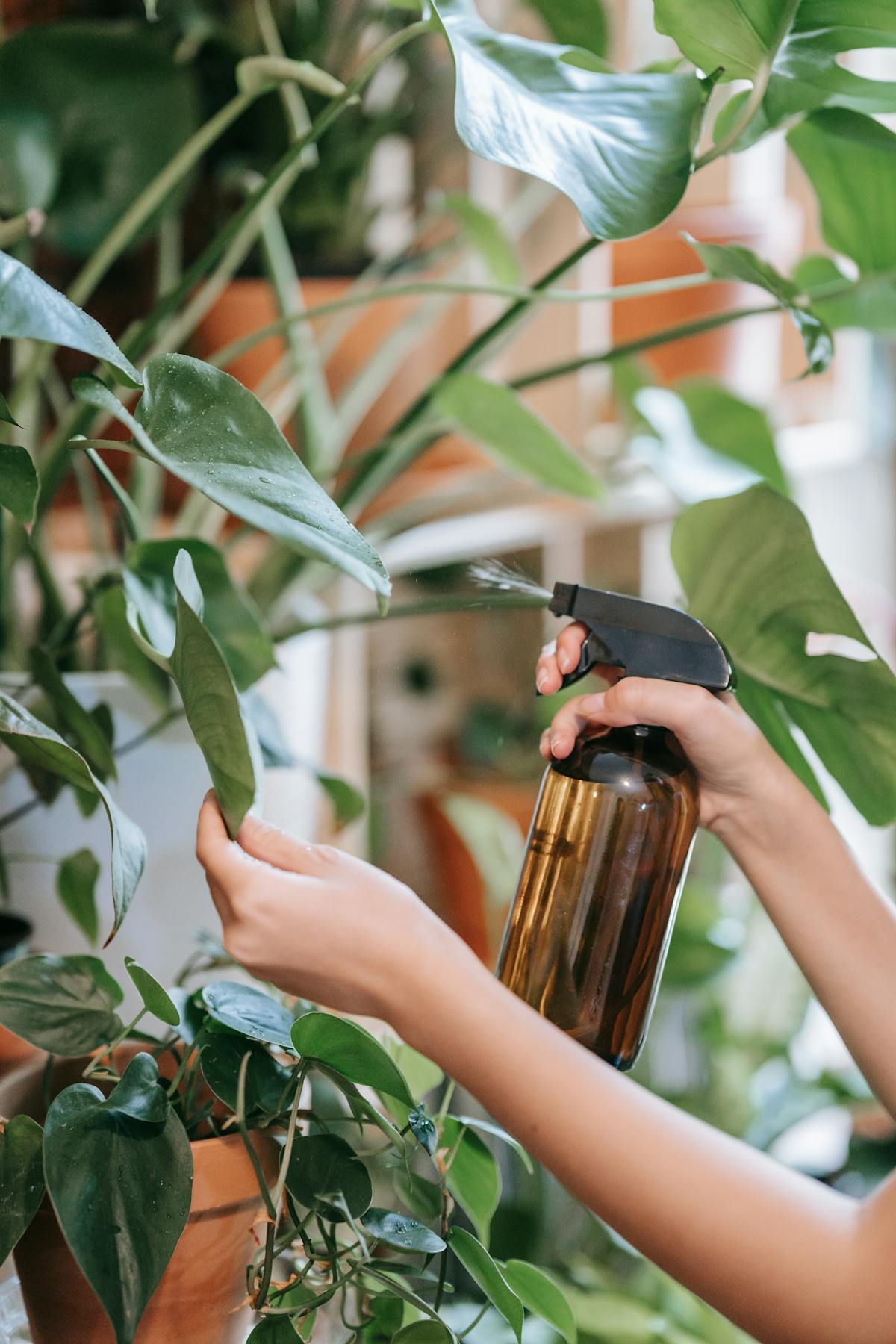
Person using a spray bottle to apply foliar treatment to indoor houseplants — the contact-kill phase of the thrips protocol

4. Mechanical Debridement: When and What to Prune

The instinct to immediately remove all damaged leaves is wrong. During week 1 of treatment, pruning physically dislodges adults, which fly to adjacent plants and establish secondary colonies. Pruning during an active uncontrolled infestation accelerates the spread within a collection.

The correct sequence is:

  1. Week 1–2: Do not prune. Apply Phase 1 and Phase 2. Allow adults to remain on the treated plant so they continue to ingest the systemic and contact treatments.
  2. Week 3: Prune leaves with >50% silvering coverage. By this point, adult populations have collapsed and the risk of dislodgement-driven spread is minimal. Each removed leaf carries hundreds of eggs sealed in the tissue — physical removal eliminates that egg cohort entirely, reducing the load on the systemic insecticide.
  3. Week 4–6: Allow new growth. Inspect each new leaf for silvering as it emerges. Clean new growth is the only valid indicator of eradication.

Discard pruned tissue in a sealed bag in outdoor refuse — not the compost. Eggs survive in detached leaf tissue for several days, and emerging adults will return to indoor plants if discarded inside.

5. The Tospovirus Risk: When to Discard the Plant

Thrips are not merely a feeding pest. The genus Frankliniella is the primary vector for the Tospovirus group of plant viruses, most notably Tomato Spotted Wilt Virus (TSWV) and Impatiens Necrotic Spot Virus (INSV). Transmission is persistent and propagative: a first-instar larva acquires the virus from an infected plant, the virus replicates within the insect, and the adult transmits the virus through its saliva for the remainder of its 15–30 day lifespan.

On Peperomia obtusifolia, viral infection presents as:

  • Concentric ring patterns — light-green or chlorotic rings on otherwise normal leaves
  • Bullseye lesions — circular spots with a darker centre and a lighter outer ring
  • Necrotic stippling — small dark patches distinct from the broad continuous silvering of feeding damage

These symptoms are distinguished from feeding damage by their geometry: tospovirus lesions are circular and discrete; thrips silvering is irregular and spreads outward from the feeding sites. A plant displaying ring patterns alongside an active thrips infestation should be isolated immediately and discarded. No fungicide, insecticide, or cultural intervention treats a plant virus. Continuing to treat the visible thrips on an infected plant achieves nothing — the virus has already moved into the vasculature, and the plant functions as an active reservoir that will reinfect every replacement plant that follows. This is one of the few cases in indoor Peperomia care where the correct intervention is destruction rather than treatment.

Variegated Peperomia obtusifolia with cream-margined leaves — variegated cultivars are particularly vulnerable to thrips because reduced chlorophyll lowers their stress tolerance

6. Prevention: Quarantine Is the Only Reliable Defence

The recurring pattern across reader correspondence on this site is consistent: a new specimen, brought home from a nursery or shipped vendor, develops twisted, distorted, silvered new growth within 4–6 weeks. Older leaves on existing plants in the collection remain unaffected for the first 1–2 weeks, then begin showing damage as the introduced thrips disperse. The diagnostic key is that damage is confined to new growth only and appears first on the most recently acquired plant.

Approximately 80% of indoor thrips outbreaks trace to this introduction pathway. The remainder come from outdoor summer exposure (balcony or patio specimens) or from open-window entry of mobile adults from nearby horticultural operations.

The quarantine protocol:

  • Hold new plants 2 m from the existing collection for 4 full weeks — long enough to span one full generation cycle at indoor temperatures.
  • One blue sticky trap per quarantine pot, placed at substrate level. A single dot on the trap during quarantine is sufficient evidence of an introduced colony.
  • Inspect new growth twice weekly — the apex, the underside of unfurling leaves, and the leaf axils. Use the paper-tap test on any suspect specimen.
  • Treat preventively if doubt exists: a single foliar application of insecticidal soap on day 1 of quarantine costs nothing and eliminates the 70% of cases where a low-level introduction would otherwise establish silently.

For collections already experiencing outbreaks, ambient humidity above 50% RH does not suppress thrips reproduction the way it suppresses spider mite populations. Thrips are tolerant across the full 30–70% RH range typical of indoor environments, so adjusting humidity is not a productive control measure. Eradication depends on the systemic protocol, not on environmental adjustment.

Conclusion

Thrips eradication on Peperomia obtusifolia operates at the intersection of entomology and timing. The correct treatments — imidacloprid systemic drench, potassium fatty-acid soap, azadirachtin, blue sticky traps — are widely available and well-documented. The errors that cause repeat outbreaks are nearly always procedural: stopping treatment at week 2 when visible adults disappear (while eggs and pupae remain), pruning during week 1 and dispersing adults to adjacent plants, substituting pyrethroid sprays against resistant Frankliniella populations, and continuing to treat virus-infected plants that should have been discarded. Silvering on existing leaves is a permanent record; clean new growth is the only valid measure of success. The most cost-effective intervention remains 4-week quarantine of every new acquisition — an outbreak that never enters the collection requires no protocol at all.

Related pest management resources:

Care FAQ

How do I identify thrips on my Peperomia obtusifolia?

Three diagnostic signals confirm thrips (order Thysanoptera): (1) silvering — metallic silver, grey, or bronze patches on the upper leaf surface where the cuticle has been rasped and the cytoplasm drained; (2) frass — small black or dark-green varnish-like specks clustered directly on the silvered areas; (3) the paper-tap test — hold a sheet of white paper beneath a suspect leaf and tap firmly; if 1 mm slender black or pale-yellow slivers fall onto the paper and crawl in fast, jerky bursts, Thysanoptera is confirmed. Twisted or distorted new growth — caused by feeding on developing meristem tissue — is a fourth indicator in established infestations.

Why are thrips so hard to kill with contact sprays?

Two life-cycle features make thrips resistant to contact treatment. First, female thrips use a saw-like ovipositor to cut a slit in the leaf and deposit eggs inside the plant tissue (intracellular oviposition); contact sprays cannot reach eggs sealed beneath the epidermis. Second, second-instar larvae drop from the foliage to the upper 1–2 cm of substrate to pupate, where foliar sprays never reach them. Treating only the leaves clears the visible adults while two entire life-stage cohorts continue developing untreated. Effective eradication requires systemic uptake (so feeding nymphs are poisoned through the sap) plus a soil drench (to reach pupae).

How long does it take to eradicate thrips on a Peperomia?

A minimum of 4 weeks. Frankliniella occidentalis (western flower thrips) completes a generation from egg to reproductive adult in approximately 14–15 days at 25 °C; lower temperatures extend this to 21–28 days. Weekly treatment for at least four consecutive weeks is required to cover two full generations — by week 4 the eggs laid before the first treatment have hatched, the resulting adults have been killed by systemic uptake, and the substrate pupae have emerged into a treated environment. Stopping at the first absence of visible adults (typically week 1–2) leaves the egg and pupal cohorts intact and guarantees recurrence within 14 days.

Will the silvered patches on my Peperomia ever recover?

No. Silvered tissue is permanent. Each metallic patch marks a cluster of epidermal and mesophyll cells whose chloroplasts and cytoplasm have been drained by the rasping mouthparts. The cell walls remain but contain only air, which refracts light at a different angle than intact tissue. Photosynthetic capacity in those areas is lost. Treatment success is assessed by the absence of new silvering on new growth and by repeated negative paper-tap tests — not by disappearance of existing patches. Heavily damaged leaves can be pruned once the active infestation is eliminated.

Do thrips on Peperomia transmit plant viruses?

Yes — thrips are the primary vectors of Tospoviruses, including Tomato Spotted Wilt Virus (TSWV) and Impatiens Necrotic Spot Virus (INSV). Transmission occurs when a thrips larva acquires the virus while feeding on an infected plant; the virus replicates within the insect, and the adult then transmits it persistently for the rest of its life. On Peperomia obtusifolia, viral infection presents as concentric ring patterns, bullseye lesions, or necrotic spots distinct from the diffuse silvering of feeding damage alone. A plant exhibiting both thrips and ring-pattern symptoms should be isolated and discarded — viral infections cannot be treated, and infected specimens act as reservoirs for the rest of a collection.

How are thrips different from spider mites on Peperomia?

The damage signatures are different. Spider mites (Tetranychidae, arachnids) produce fine pinpoint white stippling, silk webbing in leaf axils, and are visible as 0.5 mm specks; thrips (Thysanoptera, insects) produce larger continuous silver patches without webbing, leave black frass deposits, and are visible as 1 mm slender slivers that move in fast jerky bursts. Treatment also differs: spider mites respond to potassium fatty-acid soap and azadirachtin; thrips require systemic uptake (the eggs are inside the leaf, beyond contact reach) plus a substrate drench to reach soil-pupating larvae. See the spider mite identification and treatment guide for the comparative protocol.

Can I prevent thrips from infesting my Peperomia in the first place?

Quarantine is the single most effective prevention. Approximately 80% of thrips outbreaks in indoor collections trace to a recently introduced specimen — typically from a nursery, garden centre, or shipped vendor. Hold all new plants 2 m from the existing collection for 4 weeks, with one blue sticky trap per pot, and inspect new growth twice weekly for silvering or twisted leaves. Brief outdoor exposure during summer is the second-most-common entry route; specimens returned from a balcony or patio should pass through the same 4-week quarantine before rejoining the collection.

Marcus Thorne

About Marcus Thorne

Marcus Thorne is a botanist and plant pathologist specializing in tropical houseplant diseases. With a PhD in Plant Pathology, he provides science-backed diagnosis and treatment plans for common indoor gardening issues.