Fungus Gnats on Peperomia: Adults, Larvae & the Soil-First Protocol
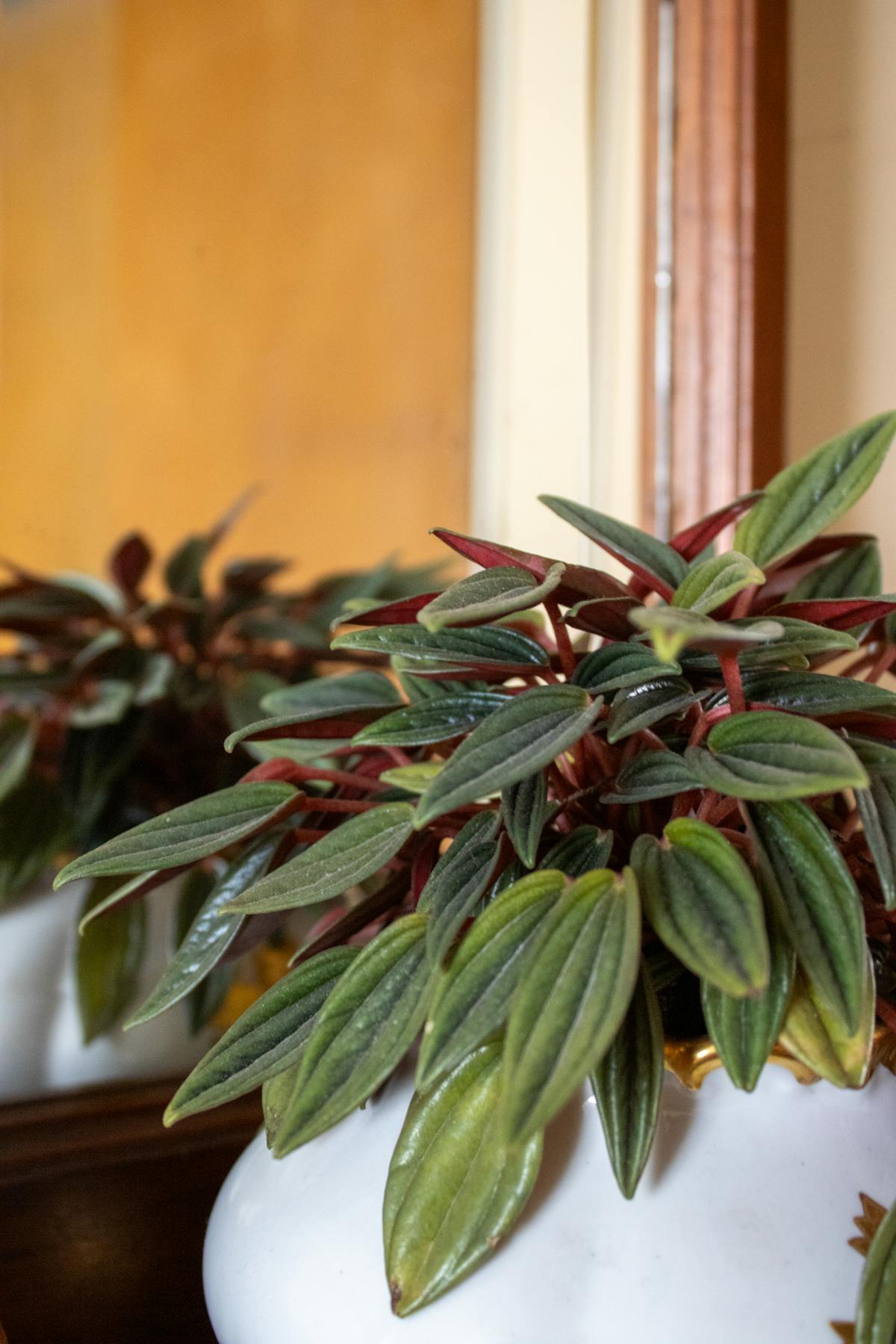
Fungus gnats (family Sciaridae, order Diptera) are 2–4 mm slender, mosquito-shaped flies that hover above the substrate of indoor Peperomia obtusifolia. The visible adults are 10–15% of the infestation. The 4–6 mm translucent, black-headed larvae — the destructive stage — live in the upper 1–2 cm of moist substrate where they feed on decaying organic matter, fungal hyphae, and the root hairs of the host plant. Larval feeding creates entry wounds for Pythium, Phytophthora, and Fusarium — the root-rot pathogen complex. Eradication requires substrate-directed treatment (BTI drench or hydrogen peroxide) sustained over the full 17–28 day generation cycle, paired with cultural barriers (bottom-watering to keep the top 1–2 cm dry, yellow sticky traps for adult interception). Single-application treatments fail because eggs continue to hatch for up to 6 days after each drench.
The pattern is consistent across reader correspondence: small black flies appear within 1–2 weeks of a watering schedule change or a new bag of compost. The grower applies a topical spray or a single peroxide drench, adults briefly disappear, and the population rebounds within 14 days. This is not treatment failure — it is the Sciaridae life cycle reasserting itself. Effective control depends on understanding which stage of the cycle is being targeted and matching the treatment interval to it.
| Life stage | Location | Duration at 22 °C | Vulnerable to |
|---|---|---|---|
| Egg | Top 1 cm of moist substrate | 3–6 days | Dry-down; not chemicals |
| Larva | Top 1–2 cm of substrate | 10–14 days | BTI, hydrogen peroxide |
| Pupa | Upper substrate | 3–4 days | Dry-down only |
| Adult | Air above substrate | 5–7 days | Yellow sticky traps |

1. Identification: Distinguishing Sciaridae from Lookalikes
Three small flies appear around indoor environments and are routinely confused. The correct identification determines the correct intervention.
Fungus gnats (Sciaridae) — slender, mosquito-like body (2–4 mm), dark grey to black, long segmented antennae, narrow clear wings with a characteristic Y-shaped vein pattern, weak erratic flight. Adults are almost always found at the substrate surface or on the lower foliage of indoor plants. Larvae are 4–6 mm, translucent with a distinctive shining black head capsule, and visible at the substrate surface if the upper 1 cm is gently disturbed. Species identification (Bradysia, Lycoriella, Sciara) requires a microscope and rarely changes treatment.
Fruit flies (Drosophila) — stouter, tan to brown body (2–4 mm), bristly short antennae, broad clear wings, red eyes in most species, hovering and direct flight, attracted to ripening fruit and fermenting food waste. Found at fruit bowls, compost bins, and rubbish bins — not at houseplant substrate. Yellow traps do not selectively catch Drosophila.
Shore flies (Ephydridae) — robust boxy body, very short antennae, fast strong flight, dark wings with characteristic 5-spot pattern. Common in greenhouses where algae develops on damp surfaces. Unlike fungus gnats, shore fly larvae do not feed on plant roots — they consume algae and fungal mats. Shore fly presence indicates an algae or hygiene problem rather than a substrate-moisture problem.
If the small black fly hovers around your Peperomia substrate when you approach the plant, it is almost certainly Sciaridae. If it appears in the kitchen near fruit, it is Drosophila. According to the Wikipedia Sciaridae article the family contains over 2,400 described species worldwide, and the indoor-pest representatives belong predominantly to Bradysia.
2. The Sciaridae Lifecycle: Why Timing Determines Everything
At indoor temperatures of 18–24 °C, Bradysia completes a generation from egg to reproductive adult in 17–28 days. The cycle has four discrete stages, each occupying a different physical location and responding to a different intervention:
- Egg (3–6 days): Deposited in clusters of 30–80 within the top 1 cm of moist substrate. A single female lays 100–200 eggs across her short adult lifespan. Eggs are 0.2 mm, translucent, and not visible without magnification. They are immune to most chemical drenches but desiccate readily when the upper substrate dries to <20% water content.
- Larva (10–14 days): The destructive stage. Four instars feed continuously on organic matter, fungal hyphae, and root tissue. By instar three, larvae aggregate in pockets of decomposing organic material and at the rhizosphere. This is the stage targeted by BTI and hydrogen peroxide.
- Pupa (3–4 days): A non-feeding transition stage in the upper substrate. Pupae are not killed by BTI (BTI requires ingestion) and are only moderately affected by peroxide. Cultural dry-down is the most reliable pupal control.
- Adult (5–7 days): Emerges from the substrate, mates within hours, begins oviposition within 24–48 hours. Adults do not feed on the plant — their mouthparts are non-functional. Their sole biological function is reproduction and dispersal to adjacent pots.
The implication is procedural: a single intervention captures one stage of the cycle while the others continue uninterrupted. Treatment must be sustained for at least 21 days — and ideally 28 — to ensure that every egg laid before the first treatment has hatched into a larva, the larva has been killed by the active substrate treatment, and the adults from any surviving pupae have been intercepted by sticky traps.

3. Adult Interception: The Phototactic Trap
Adults exhibit strong positive phototaxis toward yellow wavelengths centred on 565–575 nm. In nature this colour correlates with the spectral reflectance of new, nitrogen-rich foliage — the most likely site of moist organic matter and fungal activity. Indoor yellow sticky traps exploit this hard-wired response.
Practical deployment:
- Trap position: At the substrate surface, not at canopy height. Adults emerge from the substrate and disperse along the air boundary layer immediately above it. A trap 30 cm above the pot intercepts a fraction of the population that a substrate-level trap captures completely.
- Trap density: One trap per pot during active outbreak; one trap per 3–4 pots for ongoing monitoring after eradication.
- Replacement: Every 14 days, or when the adhesive surface is 50% covered. Beyond 50%, the pheromonal attraction from trapped adults to mates is partially offset by surface saturation.
- Quantitative monitoring: Count the adults caught per week. A falling count across three consecutive weekly intervals confirms substrate treatment is working. A stable or rising count means the cycle is being broken too slowly — usually a sign that the substrate is being treated less frequently than every 7 days.
The standard yellow sticky trap product at 6 × 8 cm is appropriate for the per-pot deployment described above. Pair with a hand lens or 10× loupe for confirming adult identity at first capture.
A single point must be stated without softening: yellow sticky traps are monitoring, not eradication. A trap catches the visible 10–15% of the colony — the dispersing adults. The 85–90% that consists of eggs, larvae, and pupae continues to develop in the substrate untouched. Posts that suggest "hang up some yellow traps and the gnats will go away" mistake one component of an integrated protocol for the whole protocol.

4. Larval Eradication: BTI and Hydrogen Peroxide
The substrate is where the population lives. Treatment applied there breaks the cycle; treatment applied above it does not.
Bacillus thuringiensis israelensis (BTI) — the biological control. BTI is a naturally occurring soil bacterium that produces protein crystals (Cry toxins) toxic to dipteran larvae and harmless to other organisms. When a larva ingests the crystals, the alkaline pH of its midgut dissolves the protein and releases active fragments that bind to specific cadherin receptors on the gut epithelium. Pores open in the gut wall, the midgut contents leak into the haemocoel, the larva stops feeding within 12 hours, and death follows within 24–48 hours. BTI specificity to dipteran larvae means it has no effect on plants, vertebrates, or beneficial insects. The mechanism is documented in detail in the Wikipedia Bacillus thuringiensis article.
The standard delivery vehicle is granular Mosquito Bits — corn cob granules inoculated with BTI strain ABTS-1857. Preparation:
- Add 2 tablespoons (≈30 ml) of granules to 4.5 litres of warm (not hot) water.
- Steep for 30 minutes, agitating occasionally. The bacterial spores and Cry crystals leach from the granules into the water.
- Strain through a fine sieve or coffee filter — the granules themselves must be removed before application, or they will support saprophytic mould growth on the substrate surface.
- Use the resulting "BTI tea" as your only watering source for the next 21 days. Apply each time the substrate reaches its normal watering trigger; do not over-water on the protocol's account.
Hydrogen peroxide — the chemical contact treatment. A 1:4 dilution of pharmacy-grade 3% hydrogen peroxide (yielding 0.6% final concentration) applied to the substrate at standard watering volume produces immediate contact mortality in larvae and pupae. The mechanism is dual: the violent decomposition reaction (peroxide → water + nascent oxygen) mechanically ruptures larval cuticles, and the released oxygen briefly oxygenates the rhizosphere — useful in pots that have been kept slightly overwatered. The drench fizzes visibly at the substrate surface for 30–60 seconds.
The two treatments combine well: BTI as the standard watering solution every 7–10 days, peroxide as a one-off heavy-knockdown drench at the start of treatment. The combination treats the egg cohort (via peroxide's mechanical reaction at the surface), the larval cohort (via BTI ingestion in the substrate), and the pupal cohort (via the cumulative dry-down between drenchings).

5. Cultural Control: Bottom-Watering and the Dry Top Layer
The single most effective long-term control is environmental, not chemical. Sciaridae adults oviposit in substrate at >50% water content; egg viability drops sharply below 20% water content. If the top 1–2 cm of substrate is consistently dry, the population cannot establish — there is no acceptable oviposition site.
The cultural protocol:
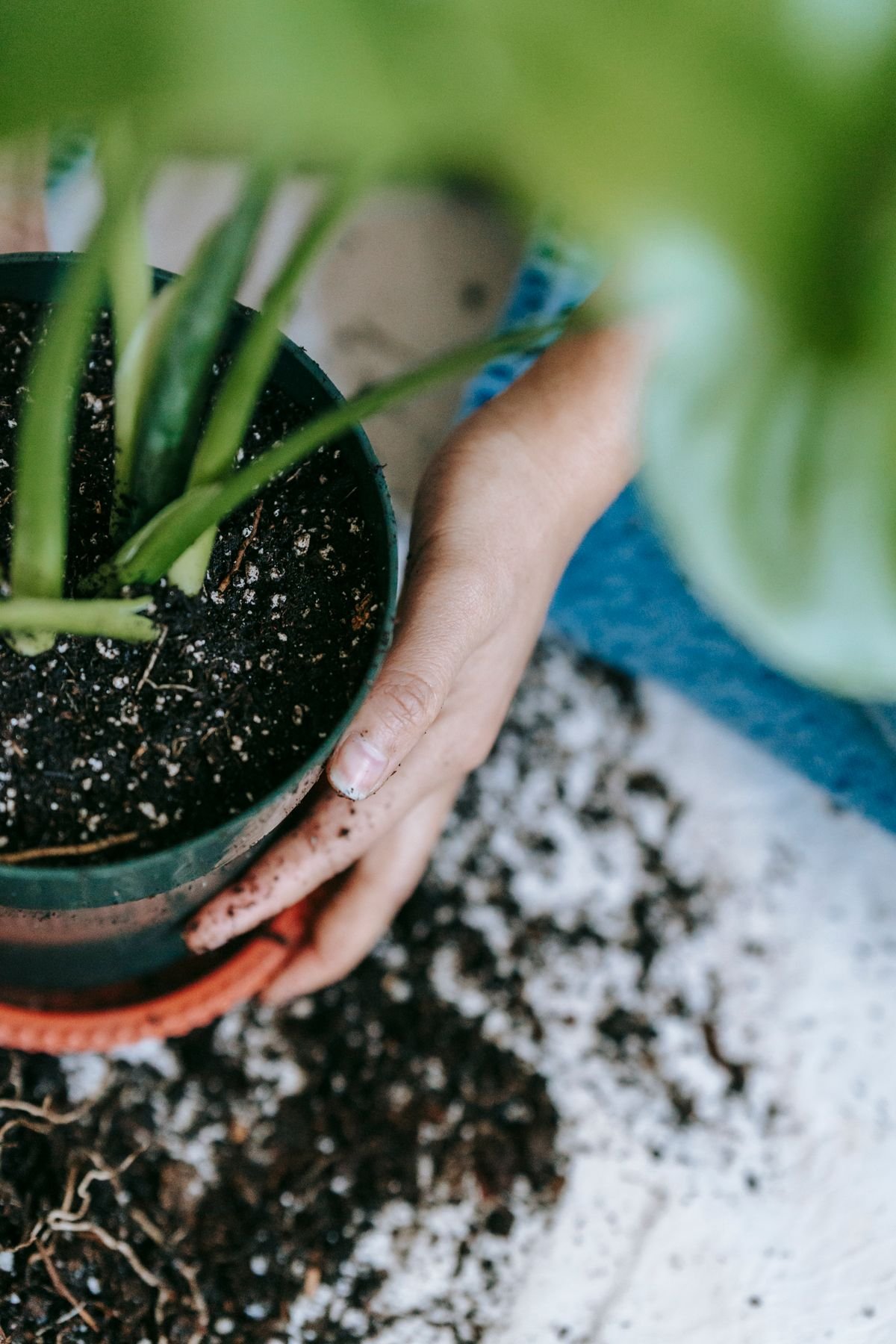
- Transition to bottom-watering as the default. Submerge the lower third of the pot in a tray of water for 15–30 minutes, then drain fully. The lower substrate hydrates by capillary action; the top 1–2 cm remains dry. Peperomia obtusifolia's root system draws moisture from the mid- and lower-substrate zones, so plant water status is unaffected.
- Top-flush periodically. Bottom-watering accumulates salts in the upper substrate over 4–6 cycles. Once per month, flush from the top with low-mineral water — running 3× the pot volume through the drainage hole — to wash accumulated salts and prevent osmotic stress.
- Top-dress with 1 cm of pumice, horticultural grit, or coarse sand. The mineral layer dries rapidly and presents a structurally hostile surface for oviposition. Combined with bottom-watering it creates a near-complete barrier to egg deposition.
- Use the correct substrate mix. Peat-heavy compost retains moisture in the upper layer and supports fungal growth — the two preconditions for Sciaridae establishment. A 50% coir, 30% perlite, 20% fine bark mix dries the upper layer between waterings and limits the organic substrate available to larvae.
The "Deep Dry-Down" — withholding water until the plant shows mild turgor loss — is a tempting tactical move during an outbreak. It works against eggs and pupae but risks under-watering damage to the plant. For Peperomia obtusifolia, which tolerates dry-down well, a single Deep Dry-Down cycle at the start of treatment is acceptable; routine reliance on it as the primary control is unnecessary once bottom-watering is established.

6. When Eradication Fails: Diagnostic Checklist
If 21 days of consistent treatment has not eliminated the adult count on sticky traps, one of five errors is almost always responsible:
- Inconsistent BTI tea preparation. Tea older than 48 hours loses potency; refrigerated tea older than 7 days is inactive. Prepare fresh weekly.
- Inadequate substrate coverage. A "watering" volume that runs straight through the drainage hole has not contacted the egg-laying zone. Saturate the upper 2–3 cm and allow the solution to penetrate before allowing drainage.
- Adjacent infested pots. Adults disperse between pots; treating one Peperomia while a Monstera 50 cm away remains untreated allows reinfestation within a single generation. Treat every pot in the room simultaneously.
- Reinfestation via fresh compost. Bagged compost stored in damp conditions becomes a Sciaridae nursery. Switch to fresh sealed bags and store dry.
- Drainage tray water reservoir. A drainage tray that retains standing water for >24 hours becomes a secondary oviposition site. Empty trays within 30 minutes of bottom-watering.
When all five are corrected and traps still show steady adult capture beyond 28 days, the issue is rarely Sciaridae — it is more often Drosophila misidentified, Ephydridae from a damp surface elsewhere in the room, or a moss-fly (Megaselia) which is yellow-trap-resistant. A 10× loupe inspection of a trapped specimen distinguishes them.
Conclusion
Fungus-gnat control on Peperomia obtusifolia is a procedural problem, not a chemistry problem. The substances that work — BTI, hydrogen peroxide, yellow traps — are widely available and well-validated; the eradication failures trace to misjudged timing or to treating one cycle stage while the others continue uninterrupted. The 17–28 day generation cycle is the controlling variable. Treatment that does not cover one full cycle does not eradicate the colony, and treatment that targets only the adults addresses 15% of the population. Once the substrate is consistently dry at the surface and the treatment protocol has run its full 21–28 day course, ongoing prevention reduces to a single change in watering technique — and the colony does not return.
Related pest management resources:
Care FAQ
How do I get rid of fungus gnats on my Peperomia obtusifolia?
Treatment must target the substrate, not the adults. Apply a Bacillus thuringiensis israelensis (BTI) drench made from "Mosquito Bits" soaked in water (2 tbsp per 4.5 litres, steeped 30 minutes, granules removed before drenching) and use this as the standard watering solution for 21 consecutive days. Pair with yellow sticky traps at the substrate surface to intercept adults. Transition to bottom-watering so the top 1–2 cm of substrate stays dry — adults will not oviposit in dry substrate. A single foliar spray or a one-off hydrogen peroxide drench is not sufficient because eggs continue to hatch for up to 6 days after each treatment.
Do fungus gnat larvae actually damage Peperomia roots?
Yes, though the primary damage is indirect. Sciaridae larvae are detritivores that prefer decaying organic matter, but in the confined volume of a pot they also feed on root hairs and the soft tips of fine roots. The mechanical wounds they create are entry points for Pythium, Phytophthora, and Fusarium — the same root-rot pathogens implicated in overwatering collapse. On a vigorous Peperomia a low-level larval population is tolerated; on a stressed or recently repotted plant the secondary pathogen risk is significant.
How long does it take to eradicate fungus gnats?
21–28 consecutive days of substrate treatment, matched to the 17–28 day egg-to-adult life cycle of Sciaridae at indoor temperatures of 18–24 °C. Treatment gaps shorter than this allow eggs laid before the previous application to hatch and develop into reproductive adults before the next treatment cohort. Stopping when visible adults disappear (typically day 5–10) leaves the egg and pupal cohorts untouched and guarantees a second outbreak within 14 days.
Is hydrogen peroxide safe for Peperomia?
A 1:4 dilution of 3% pharmacy-grade hydrogen peroxide (final concentration 0.6%) applied to the substrate is non-injurious to Peperomia obtusifolia roots at the contact duration involved. The peroxide decomposes within minutes into water and oxygen, leaving no residue. Higher concentrations or repeated daily applications can disturb the rhizosphere microbiota and should be avoided. A weekly drench combined with BTI between applications is the standard protocol.
Will yellow sticky traps alone get rid of fungus gnats?
No. Yellow sticky traps capture adults and provide quantitative monitoring data, but a single female deposits 100–200 eggs in the substrate before being captured. Traps remove the visible 10–15% of the population while the egg, larval, and pupal stages — 85–90% of the colony — continue to develop in the substrate. Traps are an essential component of integrated control but must be paired with substrate-directed treatment to achieve eradication.
Are fungus gnats different from fruit flies?
Yes. Fungus gnats (Sciaridae) are slender, mosquito-shaped, dark-bodied, and hover near the substrate surface of indoor plants. Fruit flies (Drosophila) are stouter, tan to brown, often have red eyes, and are attracted to ripening or fermenting fruit and food waste — not houseplant substrate. The two pests respond to different traps and different cultural controls; misidentification leads to the wrong intervention.
Can I prevent fungus gnats from infesting new plants?
Most indoor outbreaks trace to one of two entry points: contaminated bagged compost (eggs and larvae arrive with the substrate) and recently introduced plants (eggs in the surface layer of the nursery substrate). Quarantine each new plant for 21 days with one yellow sticky trap per pot at substrate level. Use bagged compost from sealed, unopened packaging — opened bags stored in damp conditions are a frequent introduction route. For high-risk acquisitions, the top 2 cm of substrate can be replaced with fresh pumice or grit, which is structurally hostile to oviposition and larval survival.