How to Divide Peperomia: Step-by-Step Guide
To divide Peperomia obtusifolia, water the plant one day ahead, unpot it, and separate only at natural fault lines where stem clusters already carry their own roots. Replant each section at once in a pot no more than 1–2 cm wider than its root mass. Done in spring on a multi-stem clump, success rates sit around 95%+; the main risk is an oversized pot, not the separation cut.
Division skips the rooting wait of stem cuttings entirely, whether those cuttings would otherwise root in substrate or in water — every division already carries its own vascular tissue and an established rhizosphere, with no vulnerable rootless stage at all. The trade-off is mechanical: P. obtusifolia keeps a shallow, fibrous root system, so ragged tears and oversized containers turn a high-success method into soft stems and anaerobic substrate. For method comparisons and success rates across cuttings, see the full propagation guide. This article covers root division only.
| Factor | Optimum | Risk threshold |
|---|---|---|
| Timing | Mid-spring–early summer | Winter; cold snaps below ~15 °C night |
| Parent plant | Multi-stem clump with distinct crowns | Single fused stem / active root rot |
| Pot after split | ≤1–2 cm wider than new root ball | Jumping two pot sizes |
| Recovery light | 2,000–4,000 lux | Direct sun >40,000 lux on wounded plants |
| Fertiliser | Resume after ~4 weeks | Feeding in week 1–2 |
1. When to Divide Peperomia Obtusifolia (and When Not To)
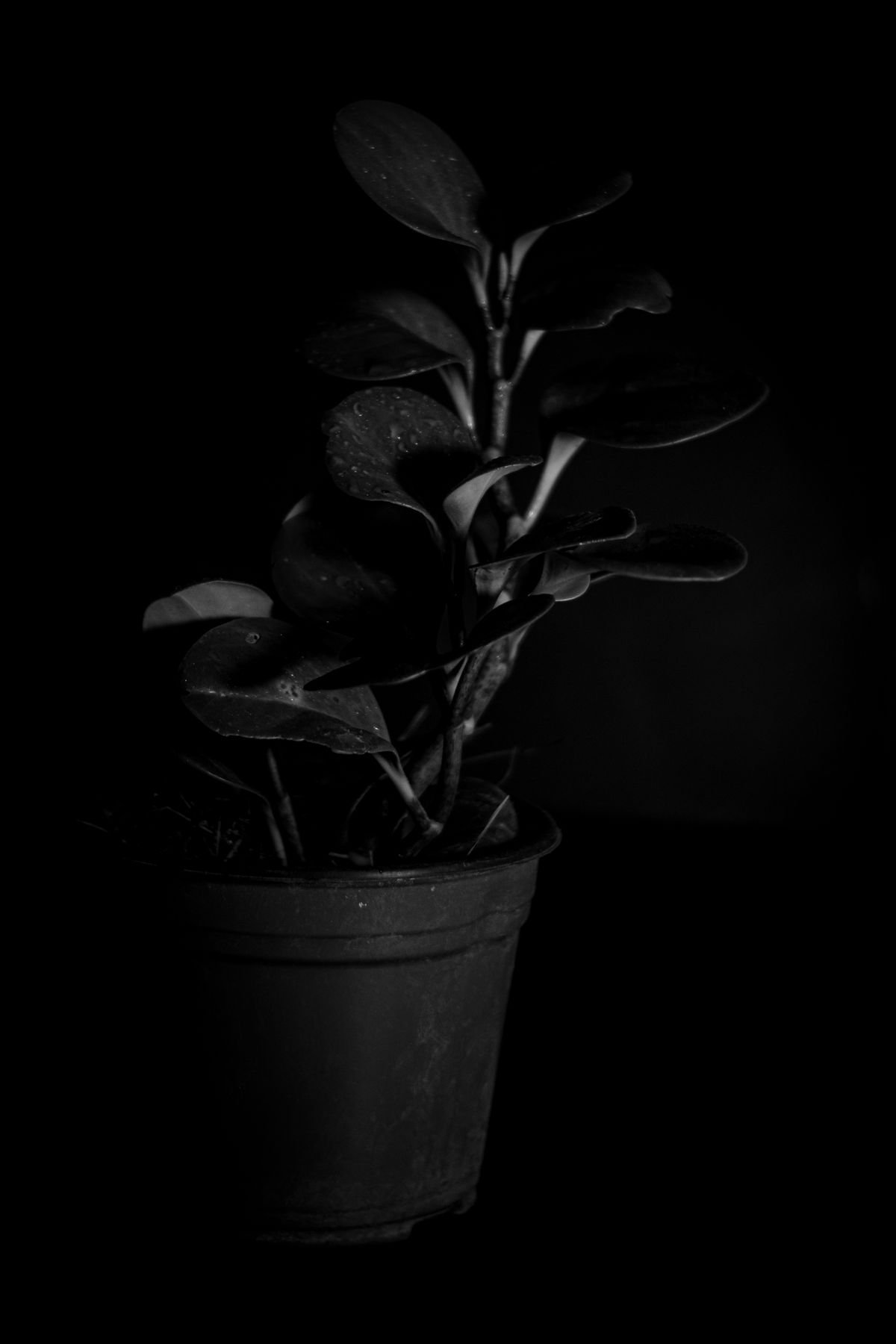
P. obtusifolia forms clumps: multiple stems rise from a shared pot, and over time many of those stems build semi-independent adventitious roots. Viewed from above, distinct foliage islands usually map to those root territories. Separating along that biology is plant propagation by division in the strict sense — moving whole rooted units, not inducing new roots from a cutting.
Best window. Mid-spring to early summer matches active growth and faster wound repair. That window also aligns with the site's best time to propagate guidance. Practical triggers for splitting now: roots circling or exiting drainage holes, substrate that dries in days because the ball has colonised the pot, or a crown so crowded that stems compete for light. Species context for habit and hardiness sits with NC State Extension and the Missouri Botanical Garden profiles; the RHS plant detail page is the UK reference for indoor dimensions and temperature limits.
When not to divide.
- Single stem, one crown. Forcing a cut through a fused root mass creates two under-rooted plants. Use a stem cutting instead.
- Winter / deep dormancy. Metabolism and auxin-driven repair are low; transplant shock lasts longer.
- Soft, foul roots. Division spreads rot. Trim and dry down first; only split after healthy white roots dominate.
- Annual “refresh” habit. The species tolerates being slightly root-bound; unnecessary annual division stacks shock without benefit. Pair division with a real repotting need, not a calendar ritual.
2. Divide Peperomia Obtusifolia: 5 Proven Separation Steps
Hydrated parenchyma resists tearing better than flaccid tissue. That is why the first step is water, not the knife.
- Hydrate 24 hours ahead. Water thoroughly the day before. Flexible roots tear less and stems hold turgor under handling.
- Extract without stem pull. Tip the pot; support the root ball. Pulling by leaves shears the shallow attachment points that division depends on.
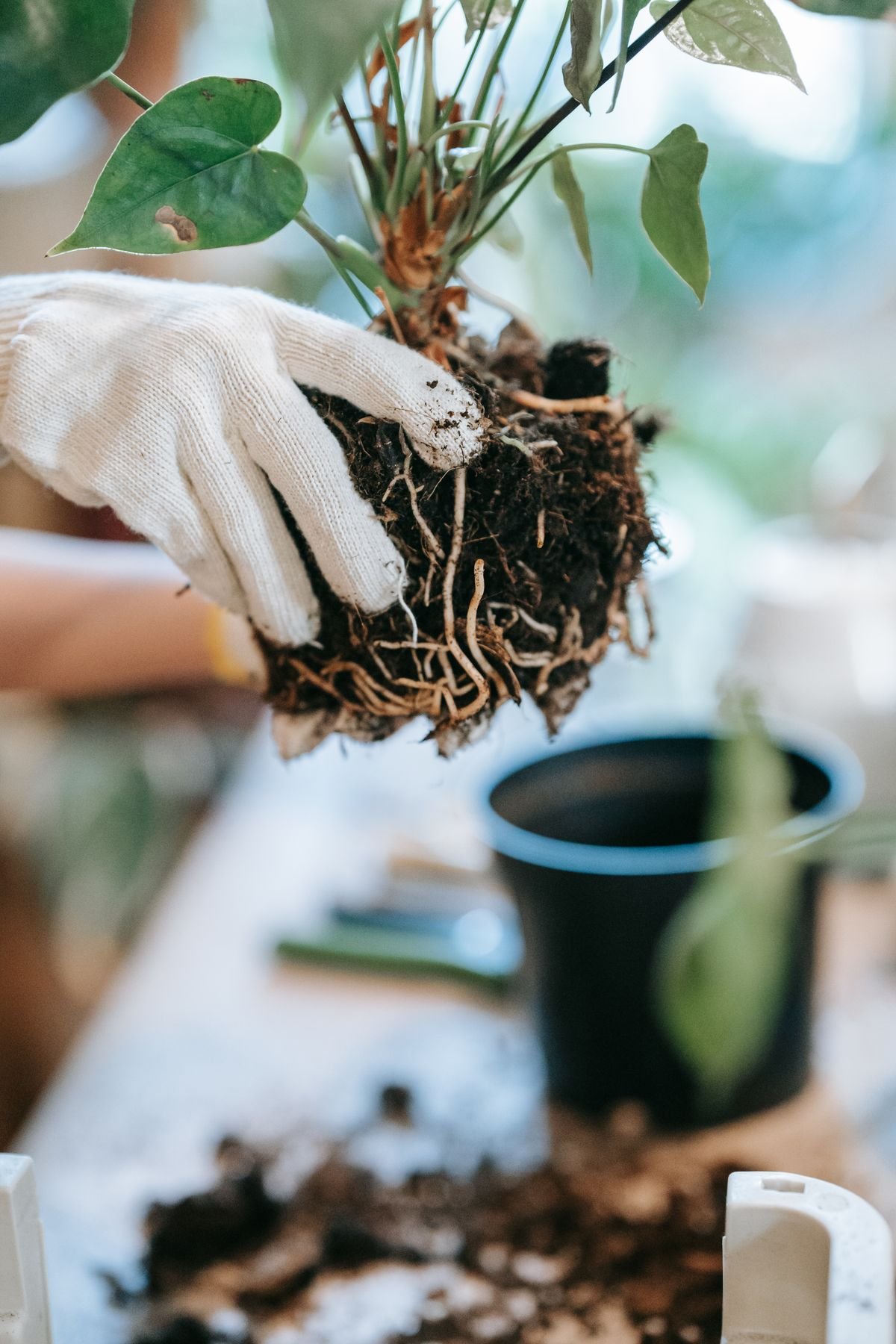
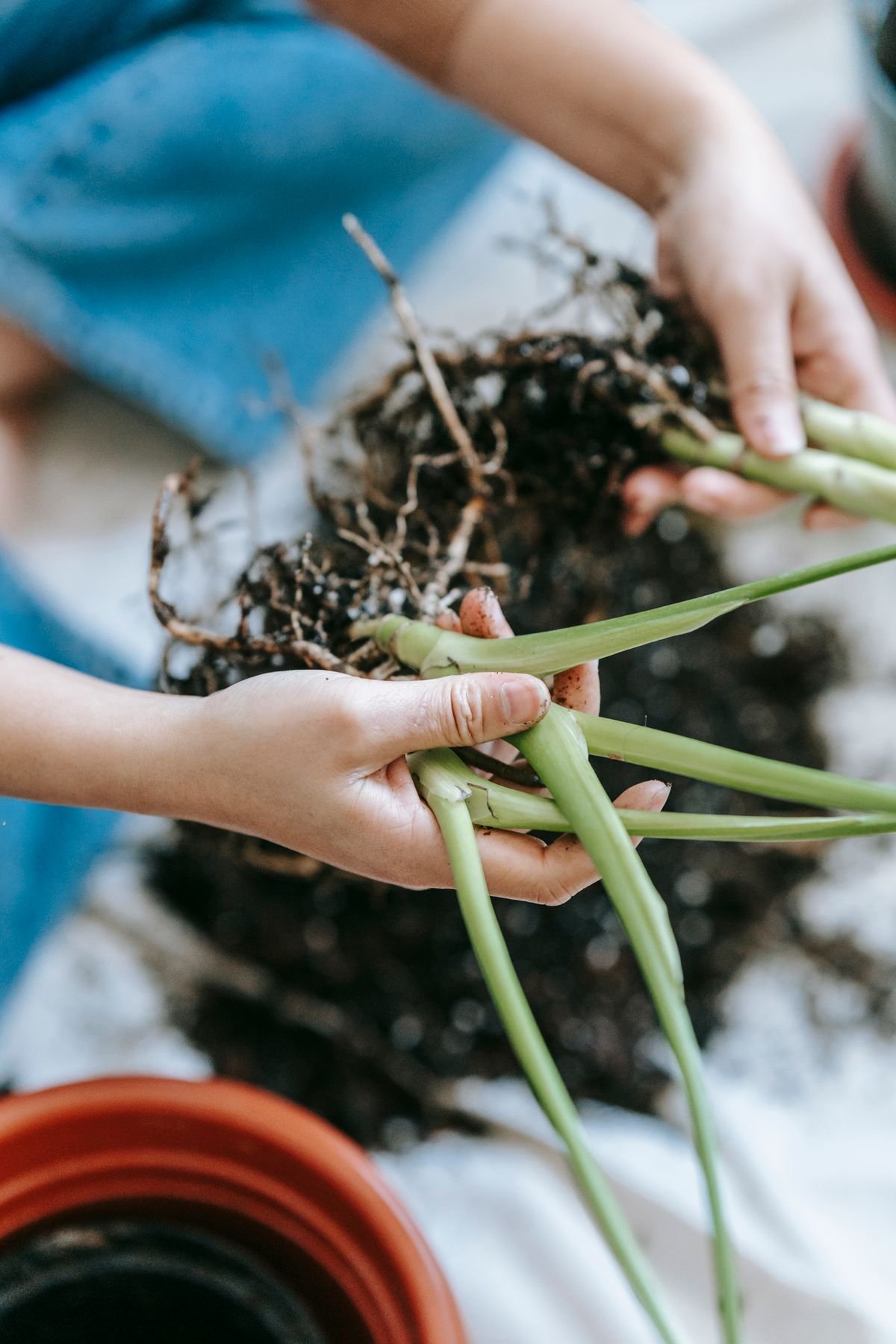
- Expose the fault lines. Crumble away roughly half the old substrate until stem bases and their root attachments are visible. You are looking for natural gaps between clusters — not a geometric half-cut through the densest centre.
- Tease first; cut only if needed. Wiggling fingers along those gaps is enough in open, aerated mixes. If the ball is tightly bound, make one clean vertical cut between clusters with a sterilised blade. Discard mushy or black roots; keep cream-coloured fibrous roots with each section. Each piece needs foliage and a root mass proportional to that shoot load — aim for roughly a quarter or more of the original root volume per substantial clump, not a bare stem with a token root tuft.
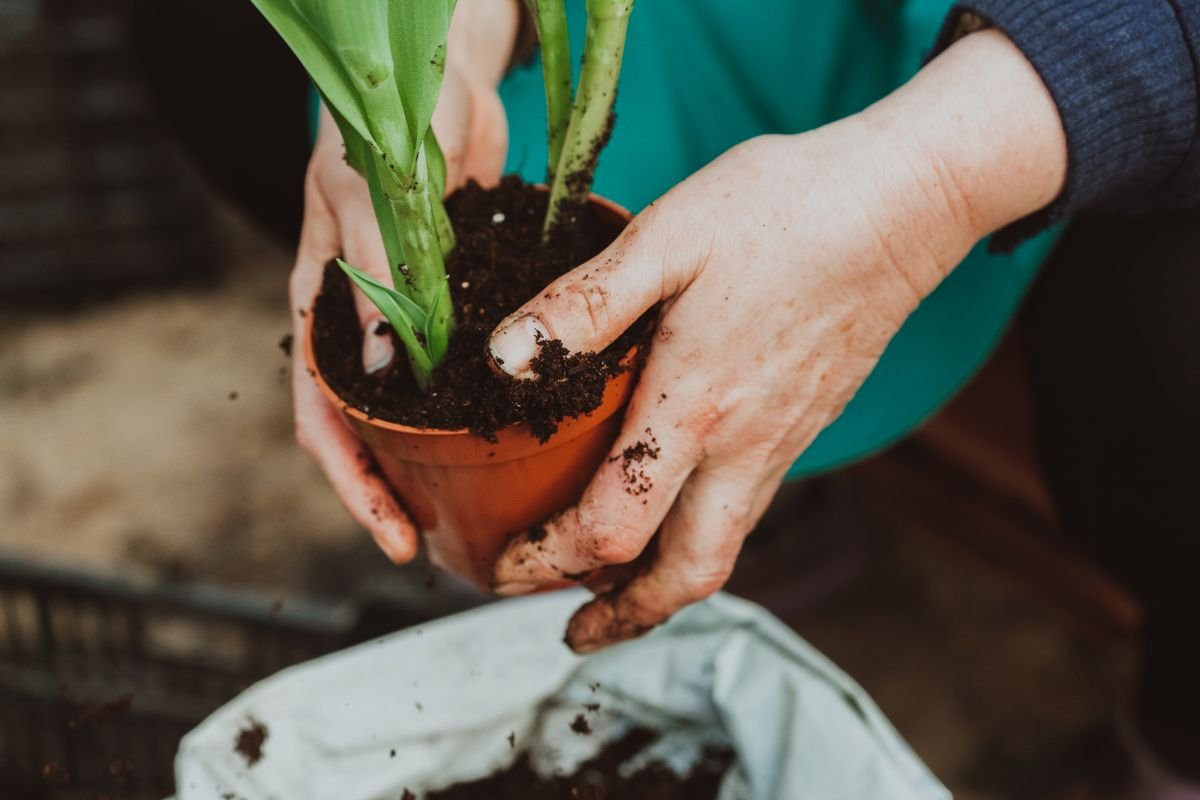
- Pot within minutes. Exposed fine roots desiccate quickly. Have free-draining mix (50% peat-free coir, 30% perlite, 20% fine bark) and pots ready. Set each division at the same soil line it had before; do not bury the crown.
If a cut is unavoidable at step 4, sterilise the blade with 70% isopropyl alcohol first, and if any exposed root tissue is soft, hollow, or discoloured rather than firm and pale, trim it back to healthy tissue before potting — planting rot-affected roots into fresh mix is a common reason an otherwise correct division fails a few weeks in. The same sterile-blade and inspection principle applies whether you are dividing an established clump or taking a stem cutting instead; if a cutting rather than a division is rotting at the cut end, the cuttings rotting guide and the callus timing guide cover that failure mode in full.
3. Pot Size After You Divide Peperomia Obtusifolia
The standard advice that kills divisions is “give them room to grow.” For this species, that is the wrong hypothesis.
A smaller root system cannot deplete water in a large volume of substrate fast enough. Residual moisture displaces oxygen; within about five days of continuous saturation the risk of Pythium / Phytophthora rises sharply. Over-potting after division fails more often than the separation cut itself.
Action: leave no more than 1–2 cm between the new root mass and the pot wall. Upsize one notch from the division’s actual ball — not from the parent’s old pot diameter. Material and drainage-hole rules are covered in the pots guide; skip gravel “drainage layers,” which raise the perched water table.
Recurring diagnostic pattern. A multi-stem plant is split into three. One piece goes into a pot sized for the original parent; the other two go into containers matched to their smaller balls. The oversized piece softens at the stem base within two to three weeks while siblings restabilise in about 10–14 days. The cut was the same operation — the container volume was not.
4. Aftercare: 10–14 Days After You Divide Peperomia Obtusifolia
Even a clean split interrupts fine-root surface area. The plant downshifts growth while it rebuilds absorptive tissue — transplant shock as metabolic suppression, not “drama.”
- Light. Hold 2,000–4,000 lux at the leaf surface. Pushing high light before roots catch up raises transpiration faster than uptake and produces wilt on moist substrate.
- Water. Wait until the top 2–3 cm is dry, then use bottom watering for the first session so moisture contacts the lower root zone without flooding the crown.
- Humidity. Keep ambient RH in the 40–60% band. If indoor air sits below ~40% RH, a loose clear bag for up to seven days cuts vapour-pressure load on wounded roots — vent daily to avoid stagnant, high-RH leaf wetness.
- Fertiliser. Skip for about four weeks. Nitrogen demand for foliar push competes with root repair; resume only after new growth confirms establishment.
Stabilisation usually shows as firmer leaves and resumed tip growth within two weeks. Persistent wilt in wet mix means re-check roots and pot volume, not more water.
5. Extra: Variegated Divisions vs Leaf Cuttings
Competitors stop at “split and repot.” Two points they underplay:
Variegation. Chimeric cultivars ('Variegata', 'Albo-Marginata', 'Alba') keep their pattern when you divide an already-variegated stem cluster, because the meristem travels with that shoot. Leaf cuttings of the same cultivars regenerate from deeper cell layers and revert to green in the large majority of cases. If the goal is more patterned plants without gambling on leaf callus, division or nodal stem cuttings are the correct tools.
Root health audit. Division is the moment to remove the black, hollow, or foul sections that silent root rot left in the old ball. Replanting diseased tissue into fresh mix is how “successful splits” collapse at week three.
6. Signs a Division Has Established, and What Failure Looks Like
A division does not root from scratch the way a cutting does — it already has functional roots — so the milestone to watch for is resumed growth, not root emergence. Firmer, glossier leaves and the first sign of new tip growth within 10–14 days indicate the division has reconnected its root system to the surrounding substrate and is functioning normally. A stalled division that shows neither decline nor progress for three to four weeks is usually under-lit rather than failing outright; confirm the 2,000–4,000 lux target before assuming the split itself went wrong.
| Symptom | Likely cause | Correction |
|---|---|---|
| Stem base softens within 2–3 weeks | Oversized pot holding excess moisture around a reduced root mass | Repot into a container closer to the actual root-ball size; do not add more water |
| Wilting despite visibly moist substrate | Root damage from tearing, or rot carried over from the parent plant | Unpot and inspect; trim any soft, hollow, or discoloured roots |
| No new growth after 4+ weeks, plant otherwise stable | Insufficient light during the recovery period | Confirm the 2,000–4,000 lux target rather than waiting longer |
| Leaf drop shortly after potting, roots otherwise firm | Normal transplant stress from reduced root surface area | Expected within limits; hold light and watering steady rather than intervening further |
| Mould or a sour smell on the substrate surface | Substrate kept too wet, often from bottom-watering without a dry-down period | Let the top 2–3 cm dry fully before the next watering; increase airflow around the pot |
Conclusion
Divide Peperomia obtusifolia only when you can see multi-stem fault lines and the calendar is in active growth. Water a day ahead, separate at those natural boundaries, pot tight (1–2 cm clearance), then run a quiet 10–14 day recovery at measured lux without fertiliser. Treat pot volume as the primary failure control. For everything else — cuttings, water vs substrate rooting, leaf timelines — use the propagation methods overview rather than stretching this protocol past what division is for.
Care FAQ
How do you divide Peperomia obtusifolia?
Unpot a multi-stemmed plant, clear enough substrate to see where stem clusters attach to roots, then tease or cut along those natural fault lines. Each section needs stems plus a proportional root mass. Pot immediately into a container only 1–2 cm wider than the new root ball.
When is the best time to divide a Peperomia?
Mid-spring to early summer, when growth and repair capacity are highest. Avoid winter dormancy and any specimen with soft, foul-smelling roots until rot is resolved. Combine with a scheduled repot when the root ball already fills the pot.
Will dividing my Peperomia cause it to die?
Rarely, if each piece keeps a workable root-to-shoot ratio. Documented success for mature multi-stem specimens is about 95%+. The usual failure mode is not the cut itself but over-potting the divisions so excess wet substrate drives root anoxia.
How do I prevent transplant shock after division?
Hold 2,000–4,000 lux (avoid harsh direct sun), keep RH near 40–60%, and skip fertiliser for about four weeks. Bottom-water the first session after the top 2–3 cm dries. Recovery typically takes 10–14 days before normal growth resumes.
Can you divide a single-stem Peperomia obtusifolia?
Not usefully. Splitting one fused crown leaves under-rooted halves that behave like damaged cuttings. Use stem cuttings instead, or wait until the plant forms separate stem clusters with independent roots.
Does division preserve variegation on Peperomia obtusifolia?
Yes. Each division keeps the existing chimeric meristem of that stem cluster. Leaf cuttings of variegated cultivars usually regenerate all-green tissue; division and nodal stem cuttings are the reliable routes for pattern retention.